Ethical Breeding
The Role of Play in Puppy Development and Ethical Breeding
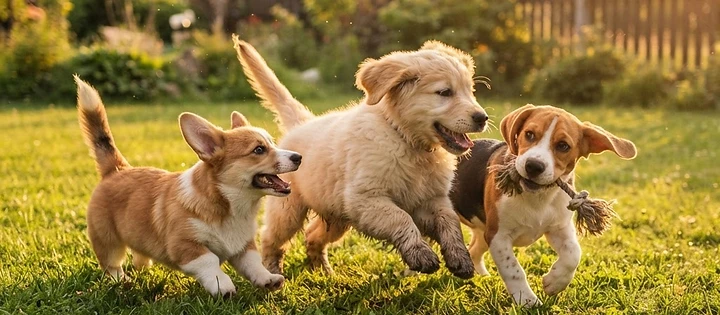
Play is not just fun for puppies. It is essential for their development. Here is how ethical breeders use play to raise confident, well-adjusted dogs.
Play Is Serious Business
When puppies play, it looks like simple fun. But play is one of the most important activities in a puppy's development. Through play, puppies learn physical skills, social rules, emotional regulation, and problem-solving.
Ethical breeders understand the power of play and make it a central part of their puppy-raising program.
What Puppies Learn Through Play
Physical Skills
Play develops coordination, strength, balance, and motor skills. Puppies learn what their bodies can do through running, jumping, wrestling, and chasing.
Social Skills
When puppies play with each other, they learn bite inhibition, social boundaries, and communication. They learn when to be gentle, when to back off, and how to read the signals of other dogs.
Emotional Regulation
Play teaches puppies to manage excitement, frustration, and arousal. They learn to ramp up and calm down, which is an essential skill for adult dogs.
Problem-Solving
Play that involves puzzles, new objects, and challenges teaches puppies to think, explore, and solve problems. This builds confidence and cognitive ability.
Confidence
Through play, puppies encounter new experiences in a safe, positive way. Each new game, toy, or challenge they master builds confidence.
Bonding
Play between puppies and humans builds the bond that makes dogs such wonderful companions. Puppies who learn that humans are fun to play with grow into dogs who seek out human interaction.
How Ethical Breeders Use Play
Puppy Play Groups
Ethical breeders ensure puppies have plenty of time to play with each other. This is where they learn social skills, bite inhibition, and the give-and-take of canine communication.
Human Play Sessions
Breeders play with puppies regularly, building the human-dog bond and teaching puppies that humans are a source of fun and positive experiences.
Novel Objects and Challenges
Breeders introduce new toys, surfaces, and challenges during play. This builds confidence and problem-solving skills.
Gentle Roughhousing
Appropriate, gentle roughhousing teaches puppies about boundaries and helps them learn to manage their excitement and arousal.
Problem-Solving Games
Puzzle toys, treat-dispensing toys, and simple problem-solving games engage puppies' minds and build cognitive skills.
Individual Play
Breeders play with puppies individually, not just as a group. This ensures each puppy gets attention and helps the breeder assess each puppy's personality.
The Role of the Mother in Play
A puppy's mother plays a crucial role in their development. She teaches them boundaries, corrects inappropriate behavior, and models calm, appropriate play.
Ethical breeders ensure the mother has time with her puppies and do not remove puppies too early, as the mother's influence is essential in the early weeks.
What Unethical Breeders Miss
No Play Opportunities
Puppies in puppy mills or overcrowded facilities may have no opportunities for play. They are kept in small spaces with no toys, no challenges, and no human interaction.
No Social Play
Puppies separated from their littermates too early miss the social play that teaches them canine communication and bite inhibition. This can lead to behavioral problems for life.
No Human Play
Puppies who never play with humans do not learn that humans are fun and trustworthy. They may grow up wary of people or unable to bond properly.
No Novelty
Puppies raised in barren environments with no new objects or experiences miss the confidence-building that comes from exploring and problem-solving.
How Play Affects Your Puppy
Confidence
A puppy who has played extensively is more confident. They have explored, problem-solved, and mastered challenges, which builds a can-do attitude.
Social Skills
A puppy who has played with littermates has better social skills. They understand canine communication, bite inhibition, and boundaries.
Trainability
A puppy who has played with humans is more trainable. They have learned that humans are fun and that interacting with them is rewarding.
Emotional Regulation
A puppy who has learned to manage excitement and frustration through play is better able to regulate their emotions as an adult.
Bonding Readiness
A puppy who has experienced positive play with humans is ready to bond with you. They see humans as a source of joy and connection.
How to Ask a Breeder About Play
- How do you incorporate play into your puppies' daily routine?
- Do puppies have time to play with each other and with you?
- What kinds of toys and activities do you provide?
- How do you use play to build confidence and social skills?
- How long do puppies stay with their mother and littermates?
A responsible breeder will describe a rich, intentional play program with enthusiasm.
What to Listen For
Good answers include specifics:
- We have multiple play sessions each day, both puppy-to-puppy and with humans
- We introduce new toys and challenges regularly
- We use puzzle toys to build problem-solving skills
- Puppies stay with their mother until at least eight weeks
- We play with each puppy individually every day
Vague answers are a warning sign:
- The puppies play together
- They have toys
- They have fun
Without specifics, these claims mean little.
Continuing Play at Home
When you bring your puppy home, continue the play the breeder started. Play with your puppy daily, using toys, games, and gentle challenges. This builds your bond, develops your puppy's skills, and provides the mental and physical exercise they need.
Play is not just for puppies. It is a lifelong way to bond with your dog, provide exercise and enrichment, and keep your relationship joyful and strong.
The Bottom Line
Play is not a luxury. It is an essential part of puppy development. Ethical breeders understand this and make play a central, intentional part of their program.
When you choose a breeder who prioritizes play, you are choosing a partner who has given your puppy the physical, social, and emotional development they need to thrive. Ask about play, and choose a breeder who plays with purpose.