Benefits of Adoption
The Emotional Benefits of Adopting a Dog for Children
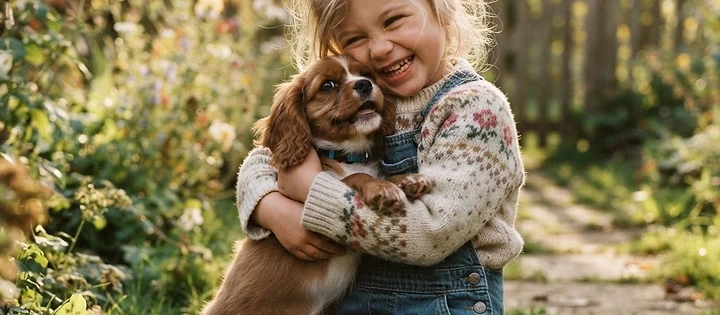
Growing up with a dog shapes children in profound ways. Here is how a family dog builds empathy, responsibility, confidence, and lifelong memories.
A Gift That Lasts a Lifetime
For many children, the family dog is their first friend, their first confidant, and their first experience of caring for another being. The bond between a child and a dog is unlike any other, and its impact echoes through a lifetime.
Research and experience consistently show that growing up with a dog offers children deep emotional, social, and developmental benefits.
Building Empathy and Compassion
Dogs feel joy, fear, pain, and comfort, and children learn to recognize and respond to those feelings. Through daily life with a dog, children practice empathy in a tangible way.
They learn that their actions affect another living being. They learn to be gentle when the dog is tired, patient when the dog is scared, and kind in every interaction. This empathy extends to people as well, shaping how children treat their friends, family, and the world.
Teaching Responsibility
A dog needs care every day. When children participate in feeding, walking, grooming, and training, they learn what it means to be responsible for another life.
They discover that the dog needs them, not just sometimes but always. This daily responsibility builds habits of reliability and care that carry into every part of life.
Boosting Confidence
Training a dog, teaching them tricks, and watching them respond builds a child's confidence. There is a unique pride in knowing that a dog listens to you, trusts you, and looks to you for guidance.
Children who may struggle in other areas often find their stride with a dog. The non-judgmental acceptance of a dog gives children a safe space to build self-esteem.
Providing Comfort and Companionship
Dogs do not judge. They do not criticize. They are simply present, offering warmth and love without conditions.
For a child navigating a hard day, a bully at school, or the ordinary struggles of growing up, a dog is a steady, comforting presence. Many children confide in their dogs, finding in them a listener who never interrupts and never tells.
Encouraging Physical Activity
Dogs need exercise, and so do children. A family dog is a built-in reason to go outside, run, play, and move.
Children with dogs tend to be more physically active, which supports their health, sleep, and mood. The daily walk becomes a shared ritual that benefits both child and dog.
Supporting Social Development
Dogs are social magnets. Walking a dog or visiting a park opens conversations with neighbors and other children. A dog gives a child something to talk about, a shared interest, and a bridge to new friendships.
For shy children, a dog can be the icebreaker that helps them connect with others. The dog becomes a safe topic and a source of confidence in social situations.
Reducing Stress and Anxiety
Studies show that interaction with dogs lowers cortisol levels and increases oxytocin, the bonding hormone. Simply petting a dog calms the nervous system and reduces stress.
For children facing anxiety, pressure, or emotional challenges, a dog offers a natural, always-available source of comfort and regulation.
Teaching About Life and Loss
A dog's life is shorter than a child's, and for many children, the loss of a family dog is their first experience with grief. While painful, this experience teaches children about the cycle of life in a real and meaningful way.
With the right support, children learn that grief is a part of love, and that the joy of the relationship was worth the pain of the loss. This understanding shapes how they face loss throughout life.
How to Help Children and Dogs Bond
Include Children in Care
Let children help with feeding, walking, and training, age-appropriately. This builds their sense of ownership and responsibility.
Teach Gentle Interaction
Show children how to approach, pet, and play with the dog respectfully. Supervise young children and dogs together at all times.
Respect the Dog's Needs
Help children understand that the dog needs rest, space, and quiet time. Teaching a child to respect the dog's boundaries is a lesson in empathy.
Make Training a Family Activity
Involve children in training sessions. This strengthens the bond between child and dog and reinforces consistent rules.
Share the Joy
Celebrate milestones, funny moments, and the everyday happiness the dog brings. These shared joys become family memories.
Choosing the Right Dog for Your Family
When adopting a dog for a family with children, consider:
- A breed or mix known for being good with children
- A temperament that is patient, gentle, and stable
- An energy level that matches your family's lifestyle
- A dog who has been socialized with children
A responsible breeder or rescue can help match you with a dog whose temperament fits your family.
A Relationship That Shapes a Childhood
The dog who shares a child's childhood becomes part of who that child is. The lessons learned, the love given and received, and the memories made shape the adult the child becomes.
If you are considering a dog for your family, know that you are giving your children far more than a pet. You are giving them a teacher, a friend, and a source of love that will stay with them long after the dog is gone.